
Peloton's Move For Life challenge is pushing members to hit 150, 225, or even 300 minutes of weekly exercise. The program combines daily walking classes — from instructors like Jon Hosking, Camila Ramon, Robin Arzon, and Jess Sims — with two full-body strength sessions per week from Andy Speer, Rebecca Kennedy, and Logan Aldridge.
Matt Wilpers designed the three tiers around real longevity research: 150 minutes of moderate cardio combined with two strength sessions per week is the minimum recommended for healthy adults. The 225-minute plan adds longer walks and combined walk-plus-strength days. The 300-minute plan pushes to 60-minute walks and extended strength work for advanced participants.
But here's what nobody's talking about: what all those extra minutes are doing to your equipment.
More Minutes Means More Wear
Your Peloton doesn't care about badges. It cares about physics.
Every pedal stroke applies force to your crank arms, bottom bracket, and drive belt. Every resistance change engages the brake mechanism. Every walk on the Tread puts steady wear on the belt, deck, and motor. Every ride deposits sweat onto metal components that can corrode over time. Every out-of-the-saddle push tests the stability of your seat post, handlebars, and frame connections.
Since Move For Life is heavily walking-focused, Tread and Tread+ owners should pay especially close attention. Walking 30–60 minutes daily is gentler than sprinting, but it's constant and cumulative — and the belt, motor, and deck don't get recovery days.
When you're riding three or four times a week at a casual pace, the wear is gradual. When you ramp up to daily sessions — mixing cycling with bootcamps, strength work with the swivel screen rotated, and back-to-back classes to stack minutes — the wear accelerates.
This isn't a reason to stop. It's a reason to pay attention.
What Move For Life Riders Should Watch For
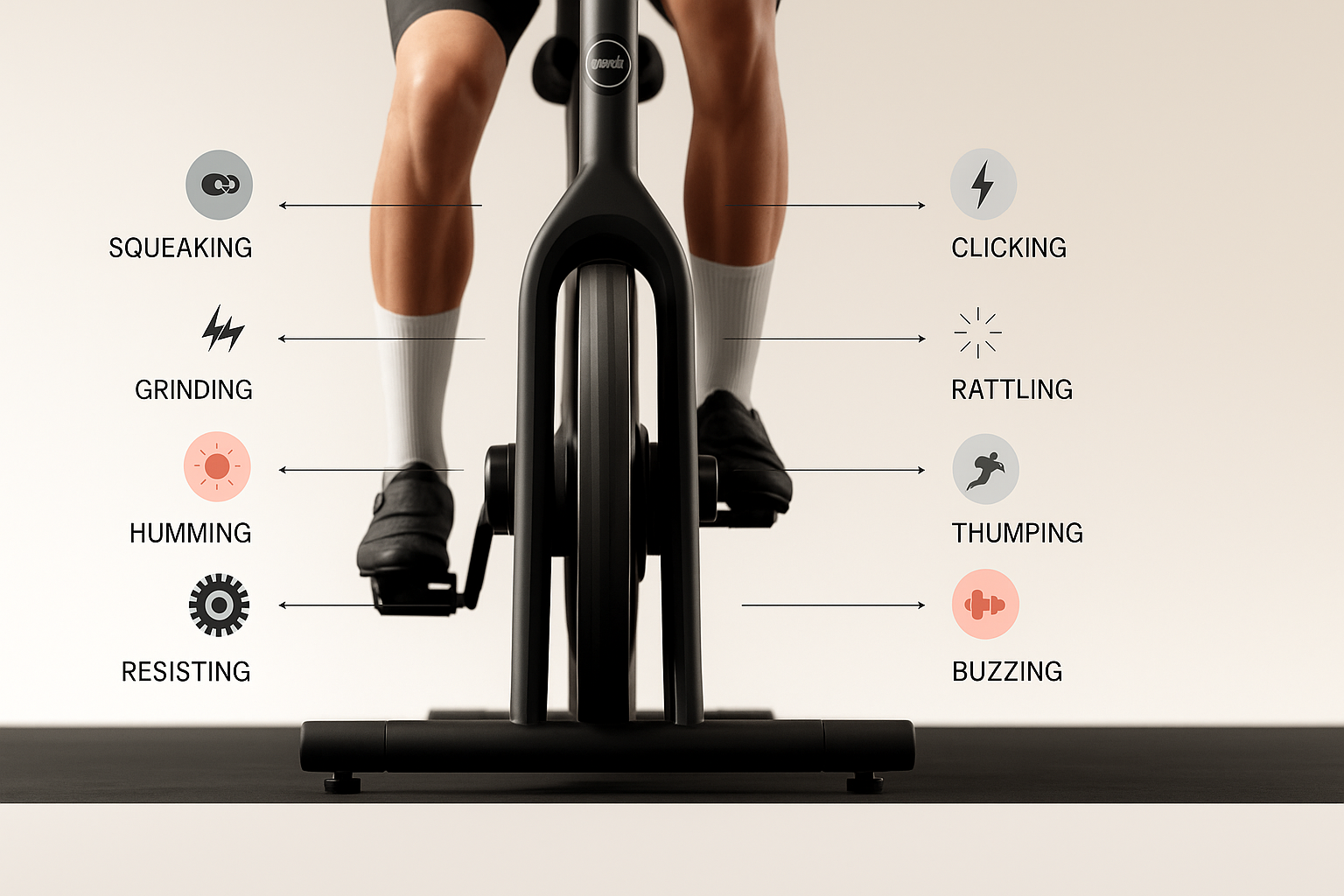
If you're deep into the challenge and pushing for 225 or 300 minutes a week, here's what to keep an ear and eye on:
Clicking or ticking sounds during pedal strokes. This is the most common issue we see in bikes that are getting heavy use. Usually it's loose cleats, a worn bottom bracket, or a crank arm that needs attention. If it only happens out of the saddle, that narrows it down. If it happens at high resistance, that tells us something different. Either way — it's your bike telling you something needs tightening or replacing before it becomes a bigger problem.
Resistance that doesn't feel right. If level 40 used to feel challenging and now it feels like 30, your calibration has drifted. This is normal with heavy use, but it means your metrics are off — and if you're tracking output for the Annual Challenge or Move For Life, inaccurate calibration is silently undermining your data.
Wobbling or rocking during intense efforts. When you're standing on the pedals during a bootcamp or high-resistance climb, the bike should feel solid. If it's rocking, check your stabilizer feet first — they may have loosened. If the wobble is coming from the frame itself, that's a hardware issue that needs professional attention.
A touchscreen that's slower than it used to be. You're switching between cycling classes, strength sessions, and stretches all in one workout. The swivel screen on the Cross Training Series gets used constantly during bootcamps. If the screen is lagging, freezing between class loads, or slow to respond to taps, it may need optimization — clearing cached data, checking connectivity, or a software reset.
Sweat damage you can't see yet. Move For Life means sweating more, more often. Sweat is corrosive. It gets into bolt threads, under the screen housing, into the seat post sleeve. You can wipe down the handlebars after every ride and still miss the places where damage accumulates slowly. A technician doing a maintenance visit checks the spots you can't see.
The 5-Minute Post-Ride Checklist You Should Be Doing
Before you call anyone, there are things you can do yourself — and you should be doing them, especially during a high-volume training block like Move For Life.
After every ride:Wipe down the frame, handlebars, seat, and resistance knob with a soft damp cloth. Get underneath the handlebars and behind the screen where sweat drips and hides. Dry everything completely — don't leave moisture sitting on metal.
Once a week:Check your pedals. Give each one a firm wiggle — they shouldn't move. If they're loose, use a 15mm wrench to tighten. Remember: the right pedal tightens clockwise, the left pedal tightens counterclockwise. Check your cleats too — if they're worn or cracked, replace them before they release mid-sprint.
Once a month:Get low and check your stabilizer feet. Are all four touching the ground? Spin them by hand to make sure they're snug. While you're down there, look at the area around the flywheel cover for dust buildup. Vacuum around the base of the bike. Dust gets pulled into the belt area and accelerates wear.
This takes five minutes. It prevents the majority of minor issues.
When Five Minutes Isn't Enough
If you're doing the above and still hearing clicking, still feeling resistance drift, still noticing wobble — the issue is internal. Bottom brackets, bearings, belt tension, crank arm alignment, sensor calibration — these require disassembly, proper torque tools, and experience identifying what's actually worn versus what just needs adjustment.
This is where a PCMP technician comes in.
In tens of thousands of service visits, the pattern is clear: riders who use their Peloton consistently — and Move For Life riders are the definition of consistent — put significantly more stress on their equipment than casual users. That's not a problem. That's just maintenance reality. The people who ride the most need maintenance the most.
A preventive maintenance visit covers everything the weekly checklist doesn't: hardware integrity checks on every bolt and connection point, sensor and resistance system evaluation, belt adjustment, crank arm and pedal inspection, touchscreen optimization, full calibration, and early detection of anything that's starting to wear.
It takes about an hour. It costs $169. And it's the difference between catching a $30 issue now and paying for a $300 repair later.
Move For Life Is About Longevity. So Is Maintenance.
The whole premise of Move For Life is simple: consistent, moderate exercise extends your life. The research is clear. 150 minutes a week is the floor. 300 is even better.
The same logic applies to your equipment.
Consistent, moderate maintenance extends the life of your Peloton. A yearly tune-up is the floor. Staying ahead of problems is even better.
You're investing time and effort into training for your long-term health. Your Peloton is the machine making that possible. It deserves the same attention.
Your Peloton. Your Technician. Your Schedule.
When you join PCMP, you get a dedicated PCMP technician — the same person, every time. They know your equipment's history. They know what to watch for on your specific model. And you can call or text them directly when something doesn't sound right.
No call centers. No phone trees. No sending videos to anonymous support agents and hoping for the best.
Phone diagnostic: $85. Your tech walks you through it live — many issues get resolved without an in-home visit.
In-home repair visit: $169. Full diagnosis, on-site repair, plus a complete maintenance treatment.
Annual maintenance plan: $169/year. One preventive visit, dedicated technician access, year-round support via phone, text, or video chat.
You're already committed to 150–300 minutes a week. Make sure the equipment can keep up.
Call or text 616-690-8041. Or visit pcmp.net to learn more.
How often should I maintain my Peloton if I ride daily?If you're riding 5–7 days a week — like most Move For Life participants — an annual maintenance visit is the minimum. Riders putting in 200+ minutes a week may benefit from a check-in at the six-month mark, even if it's just a phone diagnostic to discuss anything they've noticed.
Will the Move For Life challenge damage my Peloton?No. Your Peloton is built for regular use. But increased volume accelerates normal wear on components like pedals, bearings, and the drive belt. The challenge won't break your bike — but it will surface issues that were developing quietly. That's actually a good thing, because it means you catch them earlier.
What's the most common issue you see with high-volume riders?Clicking noises from the bottom bracket or crank arm area, and calibration drift causing inaccurate resistance readings. Both are straightforward fixes during a maintenance visit — but both get worse if ignored.
Does PCMP service the new Cross Training Series equipment?Yes. PCMP services all Peloton equipment: original Bike, Bike+, Tread, Tread+, Row, and the entire Cross Training Series including the new swivel screens, redesigned saddles, and integrated cameras on Plus models.
I'm doing Move For Life on a Tread — does this article apply to me too?Absolutely. Treadmills actually need more attention than bikes because of the belt, deck, and motor components. Walking 30–60 minutes daily puts steady wear on the walking belt and requires a level, stable surface. If your Tread is on carpet, dust buildup is an even bigger factor. Everything in this article about watching for warning signs and doing weekly checks applies — and then some.
Trust your investment to a master technician who knows you and your equipment. Note: Treadmill Maintenance Program coming soon!
The Concierge Maintenance Program includes:
Experience worry-free workouts with personalized service from a Certified Master Peloton Technician. Here's what you get with the program:
Thorough Inspection: David’s keen eyes and ears evaluate every inch of your bike and sound that it makes. This meticulous check ensures early detection of potential issues, preserving the bike’s lifespan and performance.
Hardware Integrity: Bolts, nuts, and screws on your Peloton bike’s screen, goose-neck, handlebars, cupholders, wheel cover, seat, inner and outer belt guards, stabilizers bars, foot pads, and nuts are inspected and tightened to precise specifications. This prevents unexpected loosening or breakages, providing a safe and sturdy workout environment.
Sensor and Resistance System Check: Ensuring these crucial components are working accurately guarantees your workout stats are reliable, and your resistance changes are smooth.
Front Hub and Axil Assembly Evaluation: This inspection safeguards the operational efficiency of your Peloton bike, ensuring smooth and fluid wheel movement.
Cadence Magnet Check: This ensures your pedaling speed is accurately tracked, enabling you to follow along with your workouts correctly.
Bottom Bracket Examination: Checking and tightening the bottom bracket to proper torque specifications ensures the bike’s structural integrity and prevents damaging wobble during intense workouts.
Touchscreen Optimization: By removing “bloat” data from the touchscreen memory, we enhance its responsiveness and speed, providing you a seamless user experience.
Belt Adjustment: A properly tightened and aligned belt ensures efficient power transfer from your pedaling to the bike’s mechanism, leading to an effective and smooth ride.
Crank Arm and Pedal Inspection: Tightening the left and right crank arms, inspecting pedals, and securing screw rivets ensures the stability of your pedal stroke, preventing potential injuries and maintaining bike longevity.
Proper Bike Calibration: This essential service ensures your bike’s resistance levels are accurate, offering you a consistent workout experience.
**Personalized Care: We’re always ready to answer any questions you may have, and are more than willing to look into any specific area of concern you may have with your Peloton equipment. Year round!